Hearing Loss in Older Adults: Signs, Hearing Aid Tips, and Why Hearing Health Matters
Hearing health is easy to overlook until everyday conversations start to feel harder.
Maybe the television volume keeps creeping up. Maybe family members seem to mumble more than they used to. Maybe busy places like restaurants, church gatherings, or group events feel more tiring because it takes extra effort to follow the conversation.
For many older adults, these changes happen slowly. That is one reason hearing loss can go unnoticed for years.
On a recent episode of Modern Aging on Glencroft’s YouTube channel, Glencroft welcomed guests from Ascent Audiology to the campus studio for a helpful conversation about hearing loss, hearing aids, hearing protection, and the everyday habits that help people stay connected as they age.
Host Bill Brady spoke with Dr. Matthew Wester, Doctor of Audiology and Director of Audiology for Ascent Audiology, and Eric Sage, a hearing instrument specialist with Ascent Audiology. Together, they helped explain why hearing health deserves more attention, especially for older adults and families who may not realize how much hearing affects daily life, safety, relationships, and social connection.
Why Hearing Health Matters as We Age
Hearing is not only about sound. It is part of how we stay connected to people and the world around us.
When hearing becomes harder, daily life can become more tiring. A person may struggle to follow a conversation at dinner, miss part of a family phone call, or feel left out when several people are speaking at once.
The National Institute on Deafness and Other Communication Disorders notes that age-related hearing loss is one of the most common conditions affecting adults as they age. About one in three people in the United States between ages 65 and 74 has hearing loss, and nearly half of people older than 75 have difficulty hearing.
Hearing loss can also make it harder to follow a doctor’s advice, respond to warnings, hear phones or alarms, and enjoy conversations with family and friends. Over time, that can lead to frustration or isolation.
At Glencroft Center for Modern Aging, this connects directly to whole-person wellness. Hearing supports friendship, confidence, participation, safety, and independence. Taking hearing concerns seriously can help older adults stay more involved in the life they enjoy.
Hearing Loss Often Starts Earlier Than People Think
One of the biggest takeaways from the Modern Aging conversation was that hearing loss often begins earlier than people expect.
Dr. Wester explained that age-related hearing loss commonly starts in the mid-50s, but many people may not notice it for another 10 to 15 years. Because the change happens gradually, the brain works hard to fill in the gaps.
That means a person may feel like they hear “just fine,” even while missing certain words, consonants, or details. They may hear that someone is talking, but not fully understand what was said.
This is why hearing loss is not always a volume problem. Turning something up louder does not always make speech clearer.
Common Signs of Hearing Loss in Older Adults
Early signs of hearing loss can be easy to explain away.
A person may think others are mumbling. They may blame background noise. They may avoid certain places because conversation feels too difficult. They may smile and nod rather than ask someone to repeat the same sentence again.
Common signs of hearing loss may include:
- Asking people to repeat themselves often
- Thinking others sound muffled or unclear
- Having trouble understanding speech in restaurants or group settings
- Turning up the television or radio
- Missing words when someone speaks from another room
- Relying more on lip reading or facial expressions
- Feeling tired after conversations
- Avoiding social gatherings because listening feels like work
- Hearing sound, but not understanding the words clearly
Eric Sage shared that family members, spouses, friends, and primary care physicians are often the first people to notice a change. Sometimes the person with hearing loss is not the first one to recognize it.
That is normal. It is also why gentle encouragement from family can matter.
Why Background Noise Makes Hearing Harder
Restaurants, parties, church gatherings, and group activities can be especially challenging for someone with hearing loss.
That does not always mean they cannot hear. It often means the brain is working harder to separate speech from background noise.
Dr. Wester explained that many people lose hearing first in the higher pitches. Many consonants are high-pitched and soft. When those sounds are missed, speech can become harder to understand, even when the overall sound is loud enough.
That is why someone may say, “I can hear you, but I cannot understand you.”
This distinction matters. Hearing clarity and hearing volume are not the same thing.
What Happens During a Hearing Evaluation?
The Ascent Audiology guests also explained what may happen during a hearing evaluation.
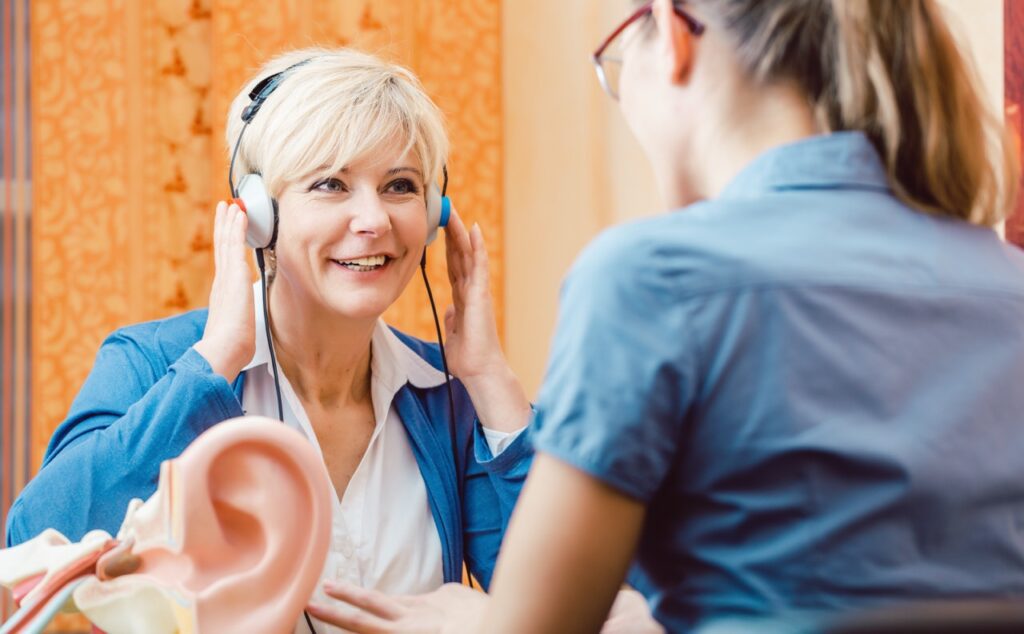
A hearing evaluation is not simply a pass-or-fail test. A hearing professional may look inside the ear, check for wax, examine the eardrum, look for medical concerns, and test how the ear responds to sound.
In a sound booth, a person may hear tones at different pitches, from low to high. The goal is to understand where hearing is strong and where it has weakened. Word recognition may also be tested to see how clearly the person understands speech.
This can help answer important questions:
- Is hearing loss present?
- Is it mild, moderate, or more significant?
- Are certain pitches harder to hear?
- Is speech understanding affected?
- Could hearing aids or other tools help?
- Is a medical referral needed?
For older adults and families, this information can be helpful because it turns a frustrating daily problem into something clearer and more manageable.
Hearing Aids for Seniors: What Has Changed?
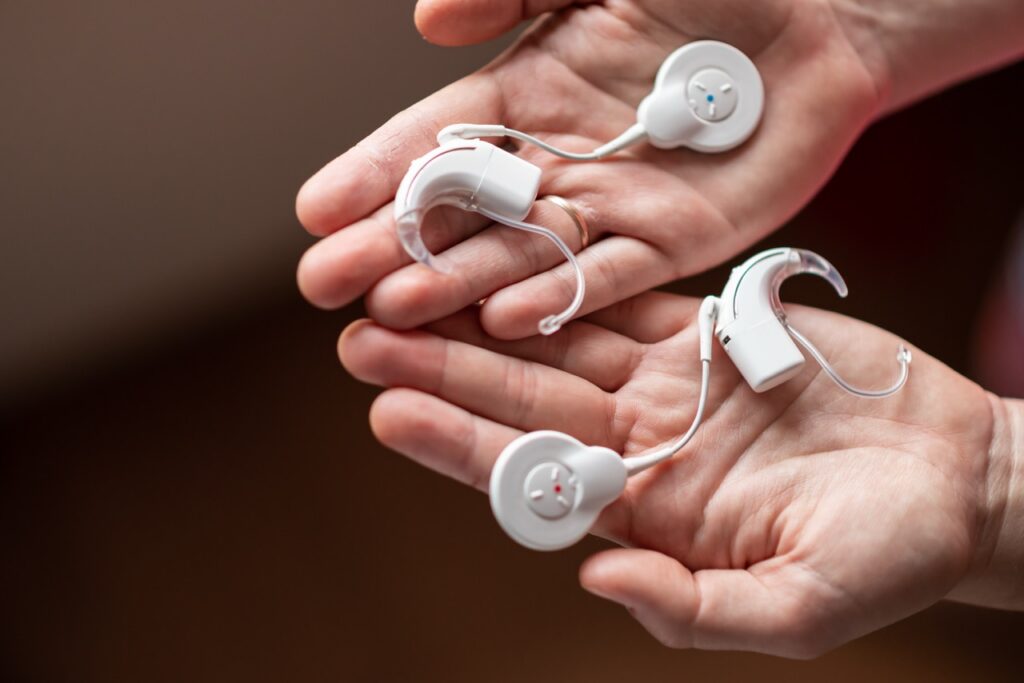
For people who need hearing aids, today’s devices are much more advanced than many people remember.
Eric Sage explained that newer hearing aids can respond to different listening environments, such as a quiet room, a noisy car, or a busy gathering. Some are very small and discreet, but the right style depends on the person’s hearing loss, lifestyle, ear shape, and communication needs.
A very small in-ear device may not be strong enough for someone with more significant hearing needs. Prescription hearing aids or other devices may be necessary for more complicated hearing loss.
The NIDCD guide to hearing aids explains that hearing aids make some sounds louder so people with hearing loss can listen, communicate, and participate more fully in daily activities. It also notes that over-the-counter hearing aids are intended for adults with perceived mild to moderate hearing loss, while prescription hearing aids may be needed for more significant or complicated hearing loss.
Why Hearing Aid Adjustment Takes Time
The fitting process can take time.
Eric explained that many people have gone years without hearing certain sounds. If everything is turned up to full strength immediately, the result can feel overwhelming.
Instead, hearing aids may be adjusted gradually so the brain has time to get used to sounds it has not been hearing clearly. Follow-up visits, cleaning, adjustments, and coaching all play a role.
This is important because hearing aid success is not only about buying the device. It is about fitting, education, comfort, realistic expectations, and continued support.
The goal is not simply to make everything louder. The goal is to help speech and everyday sound become more useful again.
Hearing Aids Help, But Communication Is Still Teamwork
Another important point from the Modern Aging episodes was that hearing aids are helpful tools, but they are not magic by themselves.
The listening environment still matters.
Dr. Wester explained that it helps to be close to the person speaking, face one another, reduce background noise, turn down the television or running water, and speak clearly. In noisy places, slower and clearer speech can make a big difference.
The NIDCD also recommends practical communication steps such as facing the person while speaking, not shouting, reducing background noise, and choosing quieter seating in restaurants.
For families, neighbors, friends, and staff, this is a helpful reminder: communication is shared work. The person with hearing loss should not have to carry the whole burden alone.
Communication Tips for Families and Friends
Small changes can make conversations easier and less frustrating.
Try these habits:
- Face the person before speaking
- Get their attention first
- Speak clearly and at a steady pace
- Do not shout
- Reduce background noise when possible
- Turn down the television during conversation
- Move closer instead of speaking from another room
- Choose quieter seating in restaurants
- Rephrase instead of repeating the same words louder
- Be patient when group conversations are difficult
These small habits can help protect relationships. They also help the person with hearing loss feel included rather than embarrassed.
Protecting Your Hearing as You Age
The Modern Aging conversation also covered hearing protection.
Dr. Wester explained that age-related hearing loss and noise-related hearing loss can add together over time. Age-related hearing loss cannot always be prevented, but noise-related hearing damage often can.
The NIDCD lists loud music, headphones or earbuds at high volume, construction equipment, fireworks, guns, lawn mowers, leaf blowers, and motorcycles as possible sources of damaging noise. It recommends avoiding loud noise, reducing the amount of time spent around loud sounds, and using earplugs or protective earmuffs when needed.
For phones and earbuds, Dr. Wester shared the “60/60 rule” often recommended for safer listening: keep volume around 60% and limit listening to about 60 minutes at a time.
This is a simple habit that can help protect hearing before damage gets worse.
Hearing Health and Social Connection
At its heart, the conversation with Ascent Audiology was about quality of life.
When hearing loss is ignored, people may slowly pull away. They may stop attending gatherings. They may feel embarrassed asking others to repeat themselves. They may avoid restaurants, group events, or family conversations because listening becomes exhausting.
When hearing loss is addressed, many people find it easier to reconnect.
That is why hearing health belongs in a larger conversation about aging well. It supports:
- Friendship
- Family relationships
- Safety
- Confidence
- Social participation
- Independence
- Emotional well-being
- Daily quality of life
For a senior living community like Glencroft, this matters deeply. Aging well is not only about care. It is about staying connected to the people, routines, and moments that make life feel meaningful.
That same idea is part of ZoeLife wellness at Glencroft, our whole-person approach to supporting residents physically, socially, emotionally, spiritually, intellectually, and vocationally.
When Should You Get Your Hearing Checked?
If you or someone you love is struggling with conversation, it may be time to consider a hearing check.
It may be worth asking questions if:
- Conversations are harder in groups
- The television volume keeps increasing
- Family members mention hearing concerns
- You often ask people to repeat themselves
- Speech sounds muffled
- You avoid gatherings because listening feels tiring
- You hear sound but miss words
- You rely more on facial expressions to understand people
If hearing changes are sudden, one-sided, painful, or paired with dizziness, ringing, drainage, or other symptoms, it is important to speak with a medical provider or hearing health professional.
Aging Well at Glencroft
At Glencroft, wellness is part of everyday life. Residents have access to a connected campus with Independent Living, Assisted Living, Memory Care, dining, activities, spiritual life, and opportunities to stay active and connected.
Hearing health fits into that larger picture. When people can hear more clearly, they are better able to join conversations, enjoy events, follow instructions, connect with neighbors, and keep participating in the life around them.
That is what aging well is really about: staying connected to the people, places, and purpose that make life feel like your own.
Watch the Full Modern Aging Episodes with Ascent Audiology
Residents, families, and community members are invited to watch the full Modern Aging episodes with Ascent Audiology on Glencroft’s YouTube channel and Glencroft’s Facebook page.
Residents can also watch Modern Aging on Glencroft GTV4, channel 4, airing daily at 8am, 11:30am, and 6pm. A new Modern Aging episode or segment airs each week, then replays throughout the week.
Thank you to Dr. Matthew Wester, Eric Sage, Ascent Audiology, and host Bill Brady for bringing this important conversation to Glencroft.
Hearing well is one more part of aging well, staying connected, and continuing to live life with confidence.
To learn more about life at Glencroft, schedule a tour or explore our Glencroft Living resident portal.
Frequently Asked Questions About Hearing Loss in Older Adults
What are the first signs of hearing loss in older adults?
Early signs may include asking people to repeat themselves, turning up the television, missing words in conversation, struggling in noisy places, or feeling that others are mumbling.
Is hearing loss just part of getting older?
Age-related hearing loss is common, but that does not mean it should be ignored. A hearing check can help identify what is happening and what options may help.
Why can I hear people talking but not understand them?
Many people lose hearing first in higher pitches, where important speech sounds and consonants occur. This can make words less clear, even when voices are loud enough.
Do hearing aids work right away?
Hearing aids can help, but adjustment takes time. Many people need follow-up visits, gradual setting changes, cleaning, coaching, and practice as the brain adjusts to hearing sounds more clearly again.
Are over-the-counter hearing aids right for seniors?
Over-the-counter hearing aids may help some adults with perceived mild to moderate hearing loss. More significant or complicated hearing loss may require prescription hearing aids or care from a hearing health professional.
How can family members help someone with hearing loss?
Face the person, speak clearly, reduce background noise, avoid shouting, and be patient. Communication works best when both people make small adjustments.